
The Best Heels for Wide Feet: Find Wide-Fit Heels You’ll Actually Feel Comfortable In
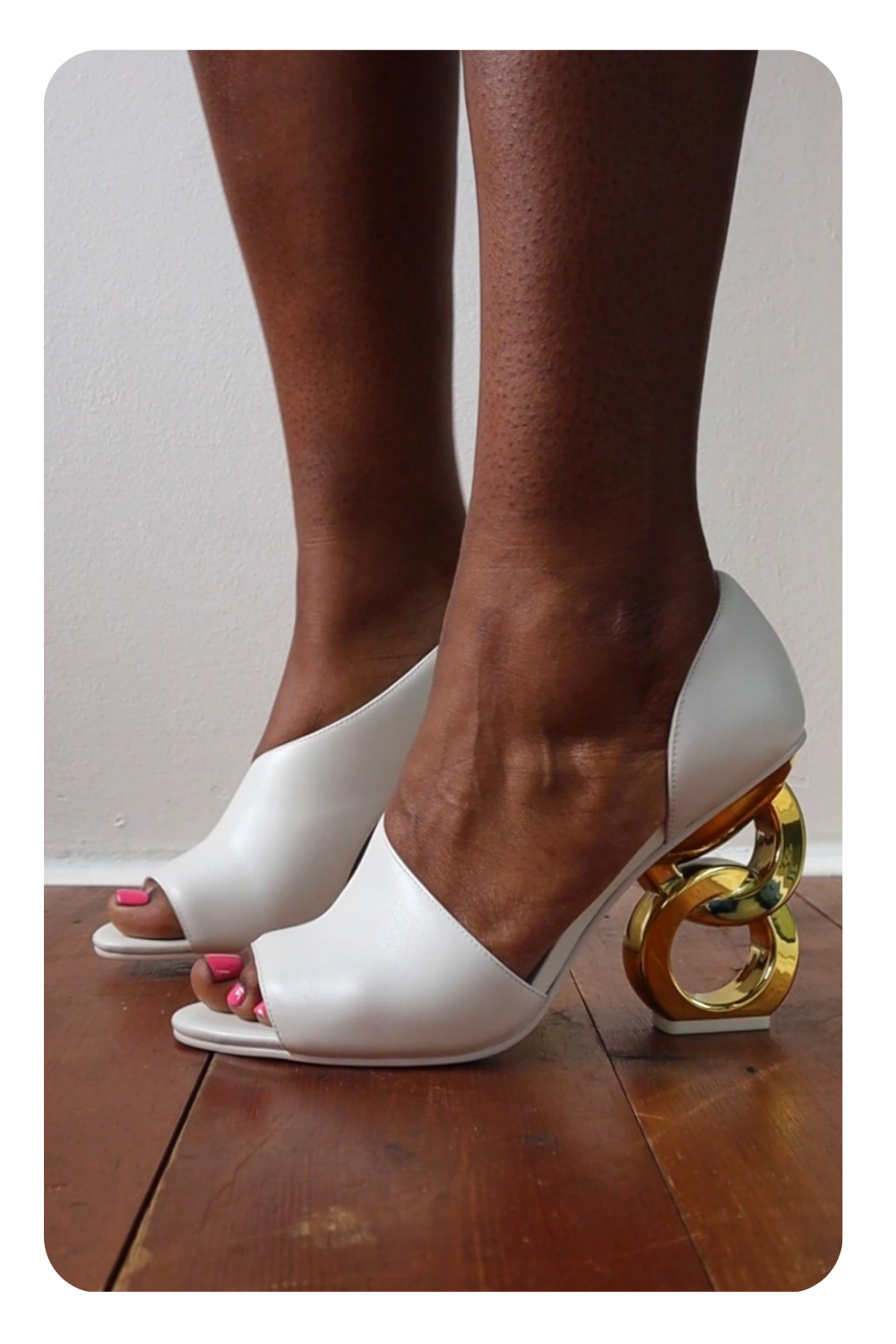
I completely understand the struggle of having wide feet. As a wide-footed girlie, I spent years wondering why heels always hurt. My toes felt pinched, the widest part of my foot felt squeezed, and I couldn’t understand how women managed to wear heels without suffering! I was buying my usual shoe size, so what was going wrong?
I remember complaining about it to my cousin when she suddenly said, “Vanessa, it’s not your shoe size…. it’s your width. You need to buy wide-fit shoes.”
So I did and honestly, this was an important key! But I soon found out that finding the right wide-fit heels isn’t always as simple as choosing a pair labelled “wide.” Widths vary between brands, and not every wide-fit shoe will be comfortable.
That’s why, in this guide, I’ll help you find stunning wearable wide-fit heels and also give you the tea on how to stay comfortable in them.
Best Wide-Fit Heels
This is the long story short. Here are my favourite comfortable wide-fit heels you can wear for many hours. Whenever I’m looking for a new pair, these are the brands I check first.
FIY, TMCH Comfort Potential is my personal assessment based on fit, width, heel height, stability and how securely the shoe holds your foot. Your experience may still vary depending on your foot shape and size.
Naturalizer
Comfortable wide-fit heels in wearable styles for work and everyday life.
ASOS Design
Comfortable wide-fit options that won't hurt your wallet.
Torrid
Extra-wide styles with more space across the toes and ball of the foot.
TMCH COMFORT FORMULA™
Before we get into wide-fit heels, there’s one thing you need to know: comfort depends on more than width. If one part of the TMCH Comfort Formula™ is missing, your heels may still hurt... even when they’re labelled wide fit.
So for your next pair of heels, use this TMCH Comfort Formula™. These five factors help you know if your heels will feel comfortable.

Fitting Shoe Size
Your heels should fit well from your toes to your heel.

Fitting Shoe Width
Your heels should feel snug, without pinching or feeling too loose.

Wearable Heel Height
Your heels should not put too much pressure on the balls of your feet.

Stable Heel Position
You should feel stable when you stand and walk in your heels.

Secure Upper
Your heels should keep your feet comfortably in place without letting you slide forward.
Can You Really Be Comfortable in Heels If You Have Wide Feet?
When you keep squeezing your feet into heels that are too narrow, I don’t care who you are or how well you can walk in heels: you will suffer. Your feet will humble you.
The fashion world often acts as if wide feet don’t exist, which can make you believe that you are the problem. But you’re not. Yes, you can absolutely be comfortable in heels when you have wide feet. You just need heels that actually make room for them.
Are wide-fit heels always comfortable?
Now, before we celebrate, a wide-fit label isn’t an automatic guarantee of comfort either. The heel still needs to be the right length, have a wearable heel height, a stable heel position and an upper that keeps your foot secure. A shoe can be wide enough and still be uncomfortable if the rest of the design is working against you.
6 Signs Your Heels May Be Too Narrow
One uncomfortable pair doesn’t automatically mean you have wide feet. But if these signs keep appearing across different brands and styles, your heels may not be giving your feet enough room.

Your toes feel cramped or get pushed together.

Sandal straps leave deep indentations around your forefoot.

Pressure quickly builds under the ball of your foot.

You regularly develop corns or hard skin where your shoes rub.

You’re left with red marks across the widest part of your foot.

Your bunions feel squeezed, irritated or painful in heels.
6 signs your heels may be too narrow | the most comfortable heels
How to Measure Your Feet for Wide-Fit Heels
Meten is weten, as we say in Dutch: measuring is knowing. If your heels regularly squeeze your toes or pinch your forefoot, don’t just assume you need a bigger shoe size. Measure your feet first.
Your regular shoe size tells you the length of your foot. It doesn’t tell you how much room the widest part of your foot needs, which is where many heels become uncomfortable.
How to Measure Your Foot Width at Home
Measure both feet while standing, with your weight evenly distributed. Your feet naturally spread when you stand, so measuring them while sitting may give you a smaller result.
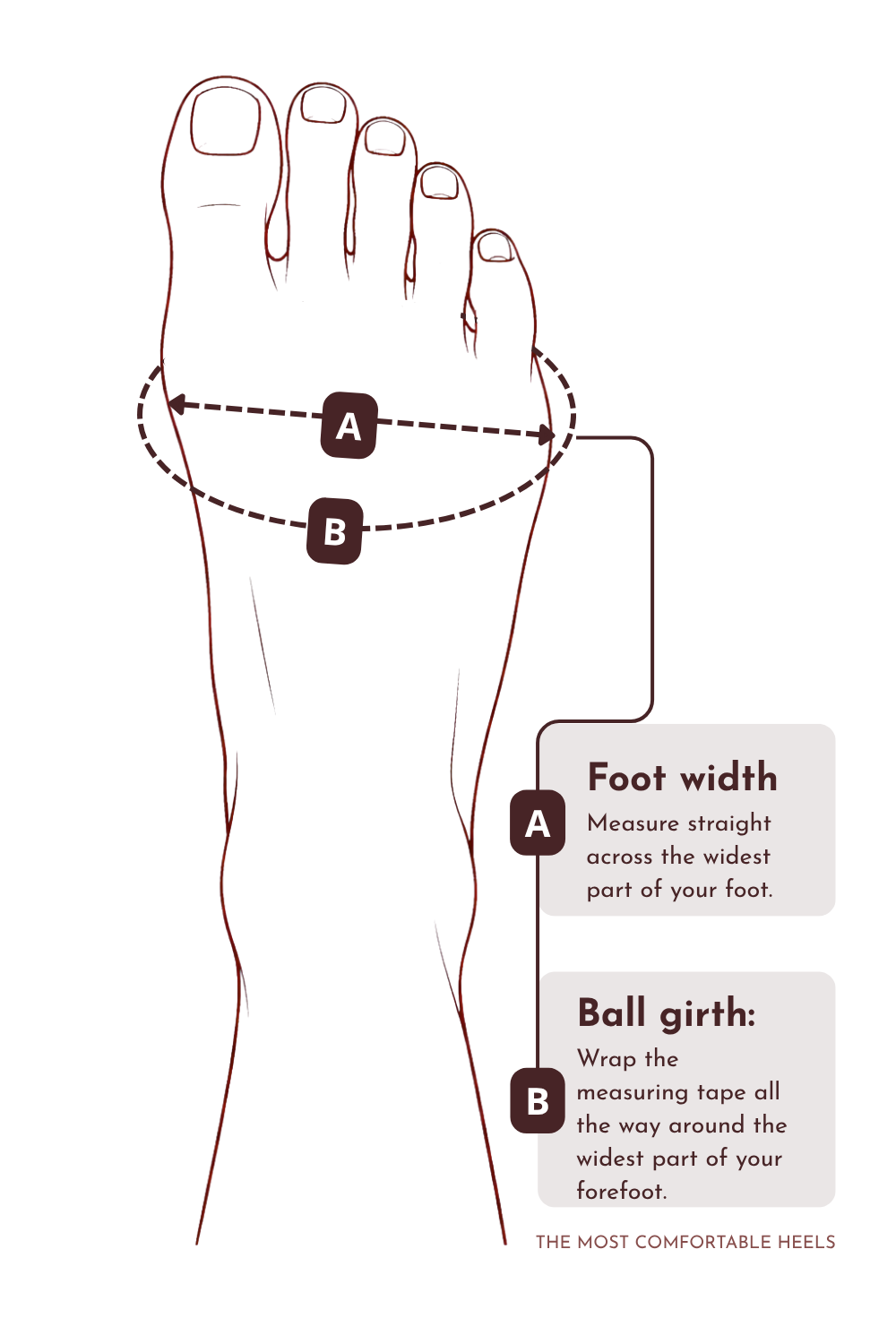
Point A: Foot width
Measure in a straight line across the widest part of your forefoot, usually from the joint below your big toe to the joint below your little toe.
Point B: Ball girth
Wrap a flexible measuring tape around the same area. Keep the tape comfortably snug against your foot without pulling it tight.
Repeat both measurements on your other foot and use the measurements of the larger foot. Many of us have one foot that is slightly bigger than the other.
Now that you have your measurements, check them against the brand’s own size and width chart. Every brand fits a little differently, so don’t skip this step! Your foot width is usually the most useful measurement when shopping for standard wide-fit heels. Ball girth comes in handy when a brand lists circumference measurements or offers made-to-measure shoes.
Always measure both feet and use the measurements of your larger foot when choosing your size. Most of us have one foot that is slightly bigger than the other, and yes, that’s completely normal.
How Wide Shoe Sizing Works
Shoe-width labels can feel like a little alphabet puzzle. You’ll see M, W and XW on one website, then D, E, EE or EEE on another. Why can’t the shoe industry just agree on one system?
Here’s the simple version:
M or Medium usually means a standard fit.
W or Wide gives your forefoot more room.
XW or Extra Wide is designed for feet that need even more space.
D, E, EE and EEE are width letters. Generally, more E’s mean more width but the exact fit depends on the brand, country and whether the shoe is made for women or men.
It’s important to not shop by the letter alone. Use the width label as your starting point, then compare your foot measurements with the brand’s own size chart. And if the reviews repeatedly say, “Runs narrow,” believe the women who came before you they are trying to save you from pain.
Naturalizer
Naturalizer is known for stylish everyday and work heels made for long days. The brand has a talent for making lower, wearable heel heights look polished, with wide-fit options available in many styles.

Vera Dress Sandal
€170
Shop This Heel →
Delphie Dress Sandal
€215
Shop This Heel →
Elaine Slingback Dress Shoe
€195
Shop This Heel →My final verdict
Naturalizer gets it: shoe sizing isn’t only about length... Width matters too. They have wide-fit options and a choice of low, mid and higher- but still wearable heel heights. This brand really gives women a real chance of finding a beautiful heel that actually fits. If you want one reliable place to start, start here.
Torrid
If regular wide-fit heels still feel too tight, have a look at Torrid. Their heels come in a proper extra-wide fit, with enough choice to find something cute instead of settling for whatever happens to fit.

Torrid Kitten Heel Mule
€57
Shop This Heel →
Torrid Kitten Heel Bootie
€80
Shop This Heel →
Torrid Criss-Cross Faux Wood Heel
€195
Shop This Heel →My final verdict
Torrid gets that sometimes wide just isn’t wide enough. Their heels come in extra-wide sizing from US 6–13, making them a great option if your feet still feel squeezed in other wide-fit brands. If that sounds like you, Torrid is absolutely worth trying.
Ally Shoes
Ally Shoes was created by a woman with wide feet, and honestly, you can tell. She worked with a podiatrist who truly understands feet, so the heels are designed to fit properly and feel supportive without sacrificing style.
Beautiful heels with extra room where you need it most.

Classic Pump
$330
Shop This Heel →
Bold Block Heels
$330
Shop This Heel →
Ankle Boots
$435
Shop This Heel →
My final verdict
Ally Shoes gets it right. The width, arch support and cushioning work together so your feet feel supported without sacrificing style. If you want one place to start, start here.
SHOES
Exclusive Discount For You
I love saving you money too. That's why I partnered with Ally Shoes to get you an exclusive discount.

ASOS
ASOS is the place to go when you want lots of wide-fit heels in one place. ASOS DESIGN has plenty of styles, and if nothing catches your eye there, brands like RAID and Public Desire also offer wide-fit options.

ASOS DESIGN Wide Fit Honour barely there heels
$45
Shop This Heel →
ASOS DESIGN Wide Fit Nightcap Heels
$48
Shop This Heel →
SEQWL Wide Fit Audi heeled Mary Janes in black
$44
Shop This Heel →
My final verdict
The biggest plus with ASOS is the choice, but both the size range and fit vary between brands. One wide fit may feel completely different from another, so check the size guide and reviews before ordering. If you like comparing lots of trendy styles and prices in one place, ASOS is absolutely worth a browse.
New Look
New Look is one of those places you can always count on for cute heels at a good price. There’s so much choice.
And most importantly for us wide-footed girlies, many of their heels come in a proper wide fit.

Wide Fit Dark Brown Faux Suede Buckle Front Court Shoes
£34
Shop This Heel →
Wide Fit Gold Cross Strap Block Heel Sandals
£29.99
Shop This Heel →
Wide Fit Black Faux Suede Mary Jane Heels
£30
Shop This Heel →
my final verdict
New Look was the first wide-fit brand I tried and it was an immediate hit. Its wide-fit heels genuinely felt wide, with the extra room my feet needed. Add the affordable prices and trendy styles, and this is a brand worth trying if standard heels usually feel too narrow but you don’t want to spend a fortune.
Wide-Fit Heels FAQs
Are you still not sure about sizing, shoe shapes or whether you really need a wide fit? Let’s answer the questions I get asked the most.
How do I know if I need wide-fit heels?
If the length of your heels feels right but your toes are cramped, the sides pinch or you’re left with red marks across your forefoot, you may need a wider fit.
Measure both feet while standing and compare the larger foot with the brand’s own width chart. Sometimes the problem is also a narrow toe box, so pay attention to the shape of the shoe too.
Should I size up in heels if I have wide feet?
Usually, no. Going up a size gives you extra length, but not necessarily the width your feet need. That extra space can leave a gap behind your heel and allow your foot to slide forward.
Stick with the correct length and look for a wider width instead. Your toes need more room, not a longer postcode.
What type of heels are best for wide feet?
Look for heels with a roomy round or square toe box, adjustable straps and an upper that doesn’t cut across the widest part of your foot.
Block heels and platforms can also feel more stable because they spread your weight more evenly than very thin stilettos. But the correct width and overall fit still matter more than the heel style alone.
Can you wear pointed-toe heels if you have wide feet?
Yes, wide feet and pointed-toe heels can coexist—but choose carefully. The pointed part should begin after your toes instead of squeezing your toes into the point.
Look for a genuine wide width, a longer toe box and a softer upper. If your toes are already overlapping inside the shoe, that pair is not going to become magically comfortable later.
What is the difference between wide and extra-wide heels?
Wide heels offer more room than a standard fit. Extra-wide heels provide even more width and often more space around the forefoot.
Labels such as W, XW, E and EE are not universal. Their exact meaning can change between brands and countries, so always compare your measurements with the brand’s own width chart.
Can high heels be stretched to fit wide feet?
Some leather or suede heels can be stretched slightly by a professional cobbler, especially around one uncomfortable pressure point. Synthetic materials may not stretch very much.
Stretching cannot completely change the width or structure of a shoe. If your heels feel seriously tight from the beginning, it’s better to find a wider pair than to put your feet through an unnecessary character-building exercise.
Does being plus-size mean you automatically have wide feet?
No. Body size does not automatically determine foot width. A plus-size woman can have narrow, standard or wide feet, just like anyone else.
Pregnancy, age and changes in weight can affect how your shoes fit, but the best way to know your current width is to measure both feet and pay attention to how your shoes actually feel.
themostcomfortableheels.com